
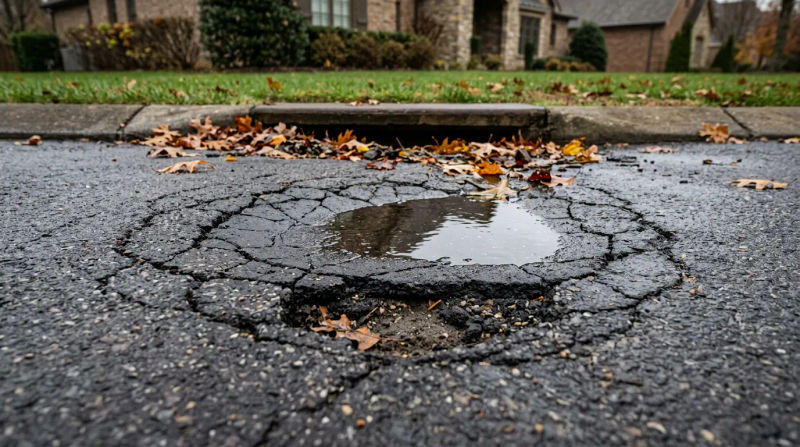
You pull into your driveway after a long day, and something feels different. A slight jolt, a soft, spongy sensation under your tires that wasn't there last week. Or maybe you've noticed a persistent puddle near the garage that never seems to dry out, even on a mild November day. These subtle changes are often the first warnings of developing asphalt problems. For many homeowners in Brentwood, these seemingly minor issues are the precursors to more significant damage like asphalt potholes and sinking pavement.
As a specialist with over 15 years of hands-on experience, I’ve seen how quickly small depressions can escalate. Especially this time of year, when falling leaves can clog drainage systems and force water to pool on the pavement, the risk increases. That standing water is the primary enemy of your asphalt, working its way into tiny cracks and beginning a destructive cycle from below.
Common Signs and Symptoms
Identifying pavement issues early is the key to preventing costly repairs. It’s about more than just spotting a fully-formed pothole. Our trained crews are taught to look for the initial indicators of failure, and you can too. Be on the lookout for these common signs on your driveway or private road:
- Standing Water or "Bird Baths": After it rains, do you notice shallow puddles that linger for hours or even days? These depressions, often called "bird baths," are a classic indicator of sub-base settlement. The asphalt has begun to sink, creating low points where water collects, accelerating further deterioration.
- Alligator Cracking (Fatigue Cracking): This pattern of interconnected cracks looks like the scaly skin of an alligator. It's a tell-tale sign of structural failure. It means the base layer beneath your asphalt can no longer support the weight of traffic, causing the surface to flex and fracture. This is a serious symptom that often precedes potholes.
- Spongy or Soft Spots: If an area of your driveway feels soft or gives way slightly when you drive or walk on it, you're likely dealing with water saturation in the sub-base. This is one of the most common precursors to sinking asphalt spots Brentwood properties experience, especially in shaded, tree-lined areas where the ground stays damp.
- Depressions Around Heavy Structures: Look for sinking around storm drains, manhole covers, or the edges of your garage slab. These areas are prone to poor compaction during initial installation, and over time, they can settle and create entry points for water.
- Visible Potholes: The most obvious sign, a pothole, is a bowl-shaped depression that has broken through the asphalt surface. They range from small annoyances to large, vehicle-damaging hazards. A pothole means the damage has already progressed through the surface and base layers.
What Causes This Problem
Understanding the root cause of these issues is crucial. Simply filling a hole without addressing the underlying problem is a temporary fix at best. In my experience, almost all significant asphalt failures can be traced back to one primary culprit: water.
The main asphalt pothole causes Tennessee residents face stem from water infiltrating the pavement's foundation. Here’s how the process typically unfolds:
- Water Intrusion: Water seeps through unsealed cracks, porous asphalt, or the edges of the pavement.
- Sub-base Weakening: This water saturates the gravel base and the soil subgrade beneath it. Brentwood’s prevalent clay subgrades are particularly susceptible; they expand when wet and shrink when dry, creating an unstable foundation that can no longer support the asphalt above.
- Freeze-Thaw Cycles: During colder months, the trapped water freezes and expands, pushing the asphalt up. When it thaws, it leaves a void. The weight of vehicles then causes this weakened area to collapse, creating a pothole.
- Traffic and Erosion: Each time a vehicle drives over the compromised area, it flexes the pavement and pumps more water through the sub-base, eroding the foundation and enlarging the void. Eventually, the surface asphalt collapses completely.
Many homes in the Brentwood area, particularly the beautiful executive-style properties built in the 1990s and 2000s, feature long, winding driveways and extensive landscaping. While aesthetically pleasing, this can sometimes lead to complex drainage challenges. If the initial grading wasn’t perfectly executed to handle runoff from large roofs and hardscapes, water can be directed onto the asphalt, where it finds any and every imperfection to exploit.
When to Call a Professional
Knowing when to patch asphalt pavement versus attempting a DIY fix can save you significant money and frustration. While a homeowner might be able to fill a very small, shallow crack with a store-bought sealant, most of the symptoms described above point to deeper, systemic issues that require professional expertise.
You should contact an experienced asphalt contractor if you notice:
- Any sinking or spongy areas. This indicates a compromised base layer that a simple surface patch cannot fix. Our technicians know that a proper repair involves cutting out the entire failed section, not just the surface.
- Alligator cracking over an area larger than a few square feet. This is a sign of widespread base failure that needs to be properly excavated and repaired to stop it from spreading.
- Potholes deeper than a couple of inches or wider than a dinner plate. A deep pothole requires more than just a bag of cold patch. A professional repair involves cleaning the hole, applying a tack coat for adhesion, filling it with hot mix asphalt in layers (lifts), and mechanically compacting each layer for a dense, durable, and long-lasting repair.
An organized workflow is essential for a permanent patch. A qualified crew will saw-cut a clean, rectangular perimeter around the damaged area, excavate the failed asphalt and base material, inspect and re-compact the subgrade, install and compact a new aggregate base, and finally, install and compact the new hot mix asphalt to create a seamless, watertight repair. This standardized process ensures the patch becomes an integral part of your pavement, not just a temporary plug.
Conclusion
Your asphalt driveway is a significant investment in your property's value and curb appeal. Paying attention to small warning signs like puddles, minor cracks, and soft spots can prevent them from turning into major structural failures. The mild, drier weather of late fall provides an excellent window to inspect your pavement and address these issues before the harsh freeze-thaw cycles of winter can cause exponential damage.
Don't wait for a small depression to become a hazardous pothole. Acting early not only keeps your pavement safe and functional but is also far more cost-effective than a complete replacement down the road. Protecting the foundation of your asphalt is the most important step in extending its lifespan.
If you notice any of these signs, contact a local asphalt contractor for an inspection. A qualified professional can assess the underlying cause of the problem and recommend the most effective, long-term solution.