
As a specialist with over 15 years in the asphalt industry, I know the first question on everyone's mind when they see a new pothole or a web of cracks is: "How much is this going to cost?" It's a valid concern, and navigating the world of asphalt repair pricing can feel confusing. My goal here is to provide a transparent breakdown of asphalt patching costs in the Hartsville and Trousdale County area, so you can budget effectively and understand the value of a quality repair.
Here in our community, we see a lot of long driveways, especially for the many 1950s-era Ranch homes, as well as small commercial lots. These surfaces take a beating from delivery trucks, turning traffic, and general wear, often leading to isolated failures. Patching is frequently the most budget-friendly solution, but the price can vary significantly. Let's dig into the numbers.
Average Costs in Hartsville/Trousdale County
It’s important to understand that these are ballpark figures. Every job is unique, but this should give you a realistic starting point for budgeting. Prices are generally based on the size of the repair, the method used, and a minimum charge to cover getting a crew and equipment to your property (mobilization).
- Small Pothole Patching (Throw-and-Roll): For a single, small pothole (less than 2 ft x 2 ft), you might see a pothole patching cost Hartsville ranging from $200 to $450. This often covers a minimum service call fee and is a simple fix. It's a temporary solution best for minor depressions, not deep, structural problems.
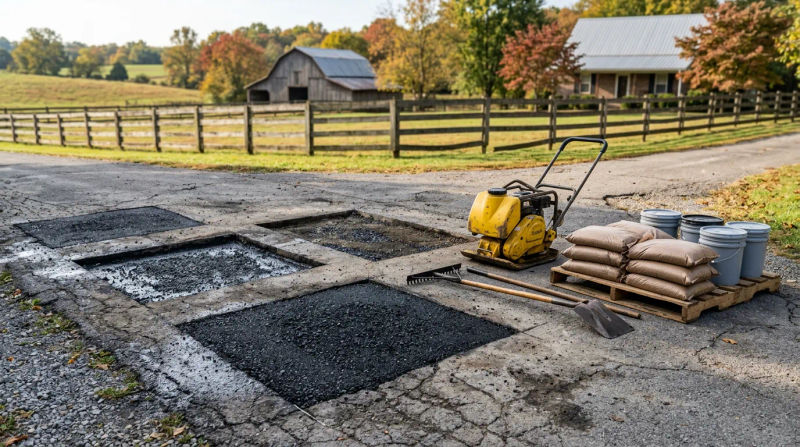
- Professional Cut-and-Patch Repair: This is the most durable and common method for significant damage. It involves cutting out the failed section, repairing the sub-base if needed, and installing new, hot-mix asphalt. The asphalt cut and patch pricing Trousdale typically runs $5 to $10 per square foot. However, most professional crews will have a minimum project cost, usually between $850 and $1,500, to make the job viable.
- Driveway Apron Repair: The apron - where your driveway meets the road - is a high-stress area. The driveway apron patch cost can range from $900 to $2,500+. The price depends on its size, the depth of the failure, and whether the repair needs to be tied into the municipal roadway, which can require more complex work.
Factors That Affect Price
The price ranges above are wide because several key variables influence the final quote. Understanding these factors will help you see why one estimate might be higher or lower than another.
- Size and Depth of the Repair: This is the most straightforward factor. A larger, deeper patch requires more materials (asphalt and base gravel), more labor to excavate and install, and more time for our equipment on-site. A 4-inch deep patch will cost significantly more than a 2-inch surface patch.
- Condition of the Sub-Base: Asphalt is only as strong as the foundation beneath it. If the gravel sub-base has failed due to water intrusion or poor compaction, we can't just pave over it. We have to excavate the compromised material and install a new, properly compacted base. This adds significant labor and material costs but is essential for a long-lasting repair. Many older driveways from the 1950s may have a thinner or deteriorated base, making this a common necessity.
- Mobilization Costs: This is the cost of getting a trained crew, a dump truck with hot asphalt, a roller, and other necessary equipment to your property. It’s a fixed cost regardless of the job size. This is why a single small patch can seem expensive on a per-foot basis - a large portion of the cost is mobilization. It’s also why bundling multiple repairs into one visit is much more cost-effective.
- Repair Method: A simple "throw-and-go" patch is cheap but often fails within a year. A proper cut-and-patch repair involves sawing clean, rectangular edges, which allows for a stronger, seamless bond with the existing pavement. An infrared repair, which heats and reworks the existing asphalt, is another option but is best for surface-level issues, not foundational failures.
- Accessibility: Can our trucks and equipment easily get to the repair area? Tight spaces, steep slopes, or obstacles can increase the labor time and complexity, affecting the overall asphalt patching cost.
How to Get the Best Value
Getting the most for your money isn't about finding the cheapest price; it's about investing in a solution that lasts. From my years on job sites, here are the best ways to maximize your investment.
- Act Quickly: A small crack or minor pothole is much cheaper to fix than a large, crumbling section of asphalt. Water is the enemy - once it gets into the sub-base, the damage accelerates. Addressing issues early saves you from more expensive repairs down the road.
- Bundle Your Repairs: If you have three separate potholes, get them all fixed at once. You’ll only pay one mobilization fee, drastically reducing the cost-per-patch and making the overall project much more economical.
- Focus on the Process, Not Just the Price: Ask contractors how they plan to perform the repair. A low bid that involves simply shoveling cold patch into a hole is a wasted investment. A proper repair with clean edges, a solid base, and proper compaction is a long-term solution.
- Plan Ahead: As we move into cooler months like October, it's an excellent time for patching. The temperatures are mild enough to allow for great compaction without the extreme heat stress of summer, as long as we have dry days to work. Planning now can set you up for a successful repair before winter moisture can do more damage.
Questions to Ask Your Contractor
To ensure you're hiring a reputable professional and getting a quality job, ask these questions before signing a contract:
- What repair method do you recommend and why? (They should be able to explain why a cut-and-patch is or isn't necessary.)
- How deep will you excavate the damaged asphalt and base? (The standard for new asphalt is typically 2-3 inches after compaction.)
- Will you be compacting the new sub-base and the new asphalt separately? (The answer should be yes. Proper compaction is critical for durability.)
- What type of asphalt mix will you be using? (Hot-mix asphalt is the industry standard for permanent repairs.)
- Is your estimate all-inclusive, or could there be additional charges?
An experienced contractor will have clear, confident answers to these questions. At H&H Asphalt, our crews follow a standardized process for every repair to ensure consistent, reliable results.
Ultimately, the cost of an asphalt patch is an investment in protecting your property. While a quick, cheap fix might seem appealing, a professionally executed repair will prevent further damage, enhance your property's safety and curb appeal, and save you money over the long term. Being informed about the process and the factors that drive cost is the best way to make a confident decision.
For a personalized estimate on your property in Hartsville/Trousdale County, contact H&H Asphalt for a free, on-site consultation.